The Fall Rush Starts Before Fall: What Canadian Outdoor Retailers Should Be Stocking Now
Published by By Larissa | North American Outdoor Supplies on 2026 Aug 10th
Fall Doesn't Start When the Leaves Change
For your customers, fall starts when the first cool morning hits.
For a retailer, it starts much earlier.
By the time customers are walking through your door asking about hunting calls, optics, knives, archery accessories, rain gear and cold-weather equipment, the opportunity to prepare your inventory is already behind you.
August is the transition month.
Summer isn't completely finished, but fall is already showing up in customer conversations, online searches and buying decisions. Hunters are checking equipment. Archers are getting serious. Campers are squeezing in the last trips of the season. And retailers are looking at the calendar wondering how quickly September arrived.
The question isn't whether fall demand is coming.
The question is whether your shelves are ready when it does.
The Canadian Outdoor Customer Doesn't Buy in a Straight Line
One of the biggest mistakes retailers can make is thinking about seasons as clean boxes:
Summer → Fall → Winter.
Canadian outdoor retail doesn't work that way.
A warm September can extend camping and fishing demand. A stretch of rain can suddenly move waterproof gear. An early cold snap can send customers looking for layers, gloves and hunting accessories weeks earlier than expected.
And regional differences matter.
What moves quickly in Alberta may not be the same product mix that performs in Ontario or British Columbia.
That's why successful retailers don't simply stock "fall products."
They build an inventory mix that can react to the season.
1. Stock the Accessories That Complete the Sale
The big-ticket product may bring the customer into the store.
The accessories often determine how much they spend.
A customer buying a hunting optic may also need mounting accessories.
A bowhunter may need replacement components, releases, arrows or maintenance supplies.
Someone purchasing a new knife may suddenly realize they need a sharpening system.
The opportunity is to stop looking at products individually and start looking at complete outdoor solutions.
Instead of asking:
"What product should I stock?"
Ask:
"What else does my customer need to actually use this product?"
That shift can turn one transaction into several.
And unlike major-ticket purchases, many accessories are easier for customers to justify as add-ons.
2. Don't Underestimate the Weather
Canadian weather is one of the biggest variables in outdoor retail.
Fall can mean crisp mornings and warm afternoons.
It can mean rain.
It can mean an unexpected cold snap.
It can mean all three in the same week.
Long-range forecasts for fall 2026 are pointing toward generally milder conditions across much of Canada, with above-average precipitation expected in many regions.
That doesn't mean retailers should try to predict the exact weather.
It means retailers should prepare for weather variability.
Think about products customers reach for when conditions change:
-
Rain protection
-
Layering and cold-weather accessories
-
Lighting
-
Hunting and outdoor safety equipment
-
Knife and tool maintenance
-
Camp accessories
-
Optics and related accessories
-
Gear protection and storage
-
Seasonal consumables
The goal isn't to guess the weather.
It's to make sure your store can respond when the weather changes.
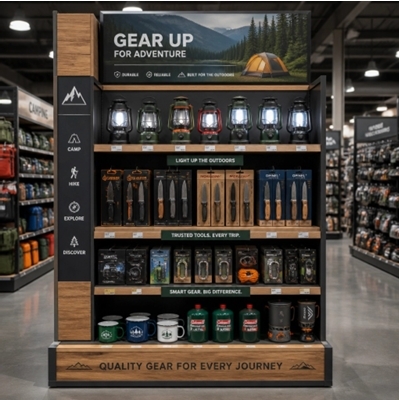
3. Build Your "Ready-to-Hunt" Shelf
Here's a simple merchandising exercise worth doing before September.
Walk through your store as if you were a customer preparing for your first fall hunt.
You have your primary equipment.
Now ask:
What am I missing?
Then look at your shelves.
Can your customer find those items without having to ask?
This is where smaller accessories can become powerful.
Create a visual "Ready for the Woods" section featuring products that solve common last-minute problems.
The customer may walk in looking for one thing.
Your merchandising should help them discover the other five things they forgot.
That's not just selling more.
That's providing a better shopping experience.
4. Watch the Price Tag — Not Just the Product
Today's outdoor customer is paying closer attention to value.
That matters for retailers.
Outdoor retail data from early 2026 showed dollar sales holding relatively steady while unit sales declined 7.3%, with average retail prices increasing 6.7%.
In other words, customers are still spending — but they're being more selective.
That creates an opportunity for independent retailers.
You don't necessarily have to compete by being the cheapest.
Instead, make it easier for customers to understand why the product is worth buying.
A knowledgeable employee can explain:
-
Why one optic is better suited to a particular application
-
Why a certain knife design makes sense for field use
-
Why a maintenance product protects a larger investment
-
Why an accessory solves a problem before it becomes one
Product knowledge becomes part of the value proposition.
And that's something online marketplaces can't always replicate.
5. Give Your Staff Something to Sell
A shelf full of products isn't a sales strategy.
Your staff should know what you want to move and why.
Before the fall rush, choose a handful of products or categories and make sure your team knows:
Who is this for?
What problem does it solve?
What does it work with?
What should we recommend with it?
That last question is particularly important.
If an employee can naturally move from:
"Are you looking for a hunting knife?"
to:
"What are you using it for? If you're doing a lot of field dressing, I'd also look at this sharpening option."
you've changed the conversation from selling a product to solving a problem.
That's where retailers create value.
6. Don't Fill Every Shelf — Build a Better Shelf
One of the biggest temptations before peak season is to buy more of everything.
More SKUs.
More brands.
More variations.
More expensive products.
More "just in case" inventory.
But more inventory doesn't automatically mean more sales.
In fact, current outdoor retail data suggests retailers need to be increasingly disciplined about inventory as consumers become more selective.
Instead, ask three questions:
Does it sell?
Does it make sense for my customer?
Does it create an opportunity to sell something else?
If the answer is yes to all three, you've probably found a strong retail product.
7. Leave Room to React
This may be the most important part of your fall buying strategy.
Don't spend your entire seasonal budget before the season starts.
Leave room to react.
Because the products you think will be the biggest sellers aren't always the products customers actually chase.
Maybe a particular hunting call takes off.
Maybe one optic becomes the item everyone is asking about.
Maybe customers suddenly start buying more rain gear.
Maybe a particular accessory becomes the "I need one of those too" product of the season.
Your wholesale partner should allow you to respond rather than forcing you to guess everything months in advance.
The best inventory strategy isn't predicting the future perfectly.
It's being positioned to respond when the future becomes obvious.
What Should Retailers Be Thinking About Right Now?
As August moves toward September, take a walk through your store and ask:
1. What products are still selling from summer?
Don't clear them simply because the calendar says fall.
2. What does my customer need next?
Think transition rather than replacement.
3. Which products naturally create add-on sales?
Those can be some of your most valuable shelf space.
4. What products am I carrying because I believe they should sell — rather than because they actually do?
Be honest.
5. How much of my buying budget have I left for opportunities?
You want enough inventory to be ready — and enough flexibility to react.
Your Wholesale Partner Should Be Part of the Strategy
A good distributor shouldn't simply be the company that sends you a box after you place an order.
They should help you manage the season.
That means having access to the products your customers are actually looking for, understanding seasonal demand, providing product information, and helping you replenish when something starts moving faster than expected.
That's especially important for independent outdoor retailers.
You don't have the purchasing power of a national chain.
But you have something they don't always have:
A relationship with your customer.
- You know the hunters walking through your door.
- You know what your local customers ask for.
- You know what they bought last year.
- You know what they complain about.
- And you know what they come back for.
- Your wholesale supplier should complement that knowledge — not replace it.
The Fall Opportunity Is Already Here
The retailers who win the fall season aren't necessarily the ones with the biggest inventory.
They're the ones who understand their customers well enough to have the right inventory at the right time.
Build your shelves around solutions.
Train your staff to sell the complete setup.
Watch the weather.
Protect your cash flow.
Leave room to react.
And most importantly, start preparing before your customers realize they need you.
Because when the first cold morning arrives, the hunter who suddenly realizes they're missing something isn't going to wait three weeks for you to get it.
They're going to buy it from whoever has it.
Be that store.
At North American Outdoor Supplies, we believe wholesale should be about more than moving product. It's about helping independent outdoor retailers build smarter assortments, respond to seasonal demand and keep their customers coming back.
The season is coming. Let's make sure you're ready for it.